

By DigiDeals24
Amazon has done an impressive job making Prime feel like the only way to shop smart on the platform. Pay $139 a year (or $14.99 a month), and suddenly you get free two-day shipping, video streaming, early sale access, and a dozen other perks bundled into one subscription.
But here’s the reality: a significant chunk of Amazon shoppers either don’t need Prime or aren’t getting enough value from it to justify the cost. If you order occasionally, share a household with a Prime member, or simply refuse to pay a membership fee to access deals you should be getting anyway — this guide is for you.
These strategies work without a Prime membership, right now.
→ Check our Amazon deals page for today’s live promo codes and offers.
1. Hit the $35 Free Shipping Threshold
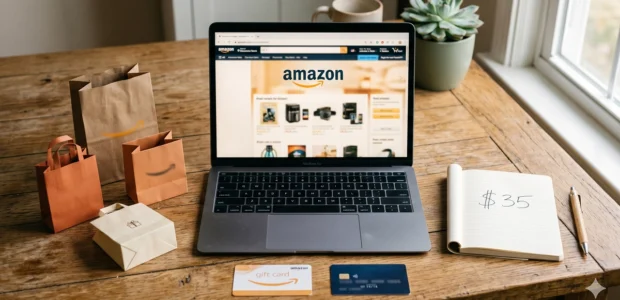
The most straightforward non-Prime shipping hack. Amazon offers free standard shipping to all customers — Prime or not — on eligible orders of $35 or more. Standard delivery typically arrives in 4–7 business days, which is perfectly fine for non-urgent purchases.
How to use this strategically:
- Bundle purchases. If you need $28 worth of items, add something small — a phone cable, a pack of pens, kitchen sponges — to push the cart over $35.
- Filter your search to show only items with free shipping eligibility before adding anything to your cart.
- Avoid single-item impulse buys that fall under $35. Save them, batch them.
The two-day urgency Prime sells is real in some cases, but for the majority of everyday purchases, four days is a reasonable trade-off for not paying $139 a year.
2. Use Subscribe & Save for Recurring Items
Subscribe & Save is one of Amazon’s most underused features — and it’s available to non-Prime members. It works like this: you set up a recurring delivery schedule for eligible products (weekly, monthly, every three months, etc.) and Amazon discounts the price automatically.
The savings typically run 5–15% off the standard price. When you have five or more subscriptions delivering to the same address on the same day, the discount tier often increases further.
Best products to Subscribe & Save:
- Household essentials (laundry detergent, paper towels, dish soap)
- Personal care (shampoo, razors, vitamins, supplements)
- Pet food and supplies
- Coffee, protein powder, pantry staples
Even non-Prime members get free standard shipping on Subscribe & Save deliveries — which is one of the few ways to get free shipping on orders under $35 without a membership. You can skip, pause, or cancel any subscription at any time with no fees.
→ Browse Subscribe & Save eligible deals on our Amazon page
3. Use Amazon’s Digital Coupons (No Prime Required)
Amazon has a built-in coupon system that most shoppers completely ignore. On eligible product pages, you’ll see a small checkbox that says “Clip coupon” — clicking it applies an instant discount at checkout, anywhere from 5% to 40% off depending on the item.
These are available to all Amazon customers, no Prime needed. Categories with the most coupon availability include:
- Grocery and pantry items
- Health, beauty, and personal care
- Home and kitchen appliances
- Electronics accessories
- Baby products
How to find them: Search for your product as normal, then filter results by “Coupon” in the left sidebar. You’ll see all currently clippable deals in one place. This alone can save you a meaningful amount if you shop Amazon regularly for household goods.
4. Time Your Purchases Around Amazon’s Open Sales Events
Prime Day gets all the attention, but it’s exclusively for Prime members. What most people don’t realise is that Amazon runs several major sales events per year that are open to all customers — no membership required.
Amazon’s Big Spring Sale is open to all customers without a Prime membership, though Prime members do get access to additional exclusive deals during the event. The sale typically runs for a full week in late March and covers everything from cleaning products to electronics.
Other open sale events to watch:
- Black Friday and Cyber Monday — Amazon’s biggest public sale, accessible to all
- Holiday Sale (December) — gift sets, electronics, and seasonal categories
- Back to School (August–September) — laptops, supplies, and student essentials
Mark these on your calendar. For the big purchases you’ve been putting off — a new laptop, an air fryer, a mattress — waiting for one of these windows and stacking a coupon code on top is significantly better than buying in a random week at full price.
5. The Amazon Visa Card (No Prime Required)
The Amazon Visa earns an unlimited 3% back on Amazon.com, at Whole Foods and participating Amazon stores, with no annual fee — and crucially, it does not require a Prime membership. This is different from the Prime Visa, which does require an active membership.
If you shop Amazon with any regularity, 3% cashback on every purchase adds up fast. On $1,000 of Amazon spending per year, that’s $30 back — effectively a discount applied automatically to everything you buy, no coupon hunting required.
Pair this with Subscribe & Save and the $35 free shipping threshold and you have a solid savings stack without spending a dollar on Prime.
6. Load Amazon Gift Card Balance for a 5% Bonus
This one flies under the radar. When you reload your Amazon Gift Card balance (your stored account balance), Amazon periodically offers a bonus — typically around 5% extra on top of what you load. Load $100, get $105 in balance.
Check the Amazon Gift Cards page for active promotions before making a big purchase. If a bonus reload offer is running, fund your balance first, then buy — instant savings with zero effort.
7. Use CamelCamelCamel Before You Buy Anything
This is less about coupons and more about not getting played by fake discounts. Amazon’s “Was $89, Now $49” labels don’t always tell the full story — prices on Amazon fluctuate constantly, and what looks like a big markdown is sometimes just a return to a price that was lower three months ago.
CamelCamelCamel tracks the full price history of any Amazon product. Paste in the product URL and you get a chart showing every price movement over time. If the current “sale” price is actually higher than the average, you know to wait.
This is especially useful during major sale events where the discount marketing is heavy but the actual savings can be inflated.
8. Share Prime Benefits Through Amazon Household (If Someone You Know Has Prime)
If someone in your household — a partner, parent, or roommate — already has a Prime membership, you may be able to access shipping benefits without paying for your own membership.
Amazon Family lets you link an additional adult account and up to four children to a standard Prime membership, allowing benefit sharing at no extra cost. Both accounts need to be at the same address.
This isn’t a workaround — it’s an official Amazon feature. If you’re in this situation, take advantage of it rather than paying for a duplicate membership.
9. Check Third-Party Sellers for Better Prices
Not everything on Amazon is sold by Amazon. A large portion of product listings come from third-party sellers, and these sellers sometimes offer significantly lower prices than the Amazon-sold equivalent — often with free shipping included in the listing.
When you’re on a product page, scroll down to “Other Sellers on Amazon” or click “New from $X” to see the full range of available prices. Sort by price + shipping combined, not just the item price alone.
This works particularly well for:
- Books and textbooks
- Electronics accessories and cables
- Toys and collectibles
- Niche or specialty products
10. Stack DigiDeals24 Coupon Codes at Checkout
Amazon does accept third-party promo codes on select products, particularly for brands selling through Amazon’s platform. These are different from the clippable digital coupons — they’re alphanumeric codes entered in the promo code field at checkout.
We track and verify these codes daily on our Amazon coupons page. When a valid code is available for a product you’re buying, it layers on top of any existing sale price or clipped coupon for additional savings.
Is Prime Ever Worth It Without Heavy Use?
To be fair — Prime does make sense for certain shoppers. If you’re ordering more than twice a week, using Prime Video regularly, or buying fresh groceries through Amazon Fresh, the $139 annual fee can pay for itself.
If you spend around $2,780 per year at Amazon or Whole Foods using the Prime Visa, the rewards effectively cover the annual Prime fee — so for heavy users, the membership cost essentially disappears.
But for occasional shoppers, the math rarely works out in Prime’s favour. The strategies above — Subscribe & Save, digital coupons, the $35 threshold, open sales events, and the no-fee Amazon Visa — cover most of what Prime offers without the annual commitment.
Final Word
Amazon has built its business around making Prime feel indispensable. And for some shoppers, it is. But for everyone else, the platform still offers more than enough ways to save — free shipping thresholds, clippable coupons, open sale events, and cashback cards that require no membership at all.
The key is knowing the tools exist and using them consistently rather than defaulting to whatever Amazon puts in front of you at checkout.
Bookmark our Amazon deals page and check it before any significant Amazon purchase. We update codes and verified deals daily.
→ Browse all Amazon deals and coupon codes | See all online shopping tips
DigiDeals24 may earn a commission when you use links on this site. This helps us keep the coupon database free and up to date. All information was accurate as of April 2026.